Articles
Best Confinement Herbs in Singapore Recommended by Confinement Nannies
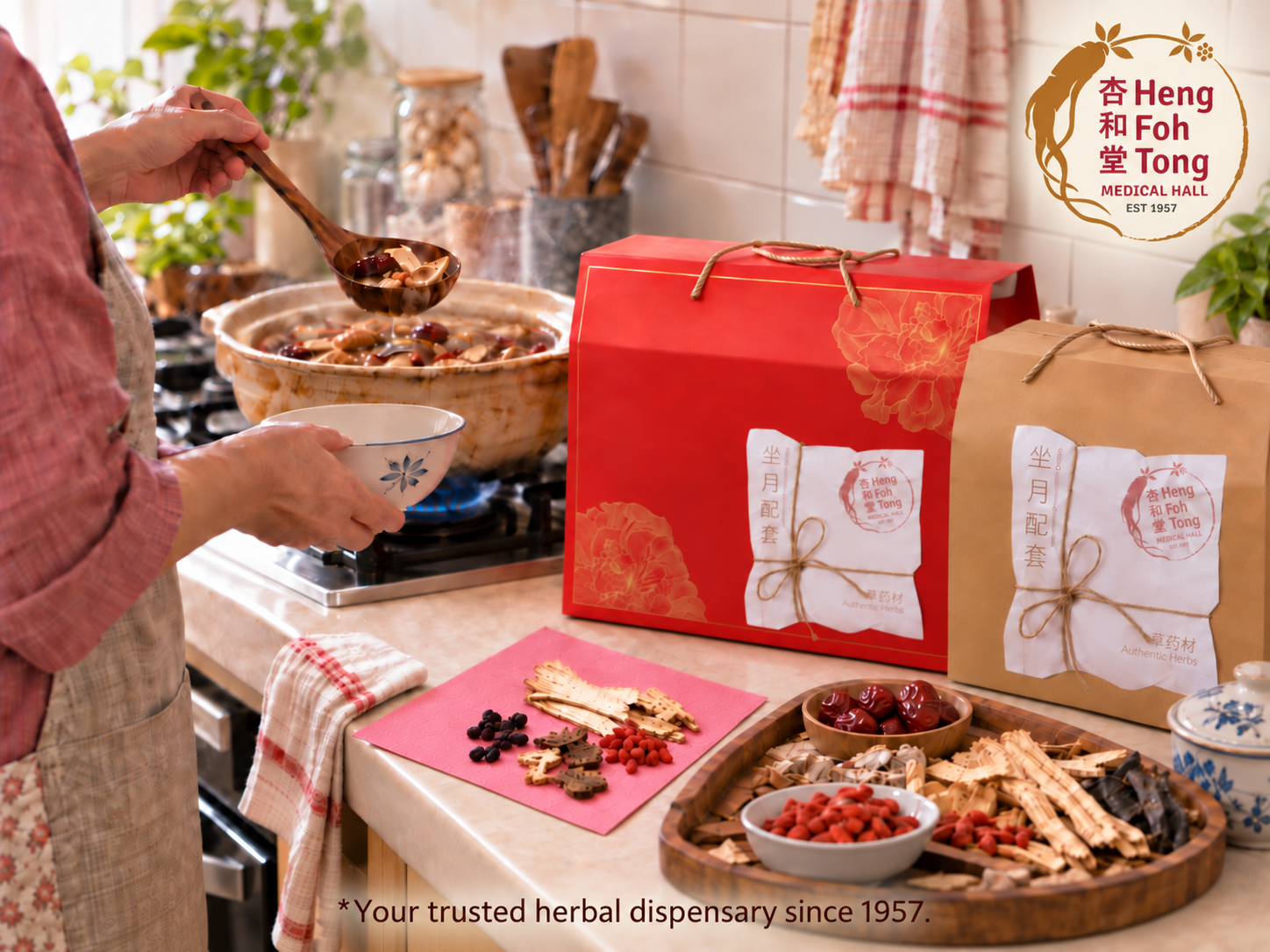
Brewing traditional herbs at home can be a ritualistic practice and a profound show of love for a new mother. When you walk into a kitchen and see a slow cooker gently simmering with the best confinement herbs in Singapore recommended by confinement nannies, you immediately sense the care involved. We know that navigating postnatal recovery requires more than a universal treatment. Choosing the right botanical blends relies on visible, practical criteria like freshness and personalisation.
The reality is that every mother experiences childbirth differently. A tailored approach ensures that your body receives the exact nourishment it needs to heal safely and efficiently.
Quick Summary
- Choose herbs according to recovery phase and individual circumstances
- Check compatibility with medicines, allergies and breastfeeding
- Look for fresh dispensing, clear daily labels and preparation instructions
- Use herbal dispensers with decades of experience for personalised herbal concoctions
- Ensure the combination is of authentic quality and generous balance quantity
Why Experienced Confinement Nannies Prioritise Personalised Herbs
Experienced nannies prioritise personalised herbs because every mother has unique recovery needs based on her birth method, medical history, and lactation goals. Customised blends ensure safety and maximum efficacy during the crucial postnatal period.
Ministry of Manpower (MOM) licensed nannies often prefer tailored solutions rather than mass-produced boxes. They understand that a mother recovering from a caesarean section requires a different timeline for lochia-clearing soups compared to someone who had a vaginal birth. When herbs are hand-dispensed to match these specific physiological timelines, the risk of complications drops significantly.
We have seen how a standard confinement herbal package can sometimes fall short. Generic recipes might include ingredients that are too warming for a mother already experiencing heatiness, or they might lack the specific herbs needed to support an abundant milk supply. Personalisation removes this guesswork entirely from Nanny and leave it to the good hands of seasoned herbal dispensers. This will allow nanny to focus on what they do best in taking of the mummy and the baby.
For most families, this shift towards bespoke care feels deeply reassuring during a vulnerable time.
Key Phases of Postnatal Herbal Recovery
Postnatal herbal recovery is divided into specific phases that focus sequentially on clearing lochia, harmonising digestion, boosting vitality, and restoring beauty. This structured approach ensures the body heals safely without being overwhelmed.
The traditional month-long Zuo Yue Zi period is not a race to the finish line. It is a carefully paced journey where each week builds upon the healing achieved in the previous days. Rushing to consume heavy tonics too early can actually hinder your recovery.
Phase 1: Uterus Recovery and Lochia Clearance
The first few days after childbirth focus entirely on clearing the uterus and promoting healthy blood circulation. Sheng Hua Tang is the primary postnatal herbal soup used during this stage. It helps to gently warm the uterus and clear lochia effectively.
However, the timing of this phase is highly dependent on your delivery method. Mothers who undergo surgical deliveries must wait until their wounds begin to heal before introducing these circulation-boosting herbs, highlighting why expert guidance is so important.
Phase 2: Digestive Harmony and Qi Restoration
Once the uterus is clearing properly, the focus shifts to harmonising the spleen and rebuilding your core energy. This is where qi and blood herbs come into play, offering a gentle, sustained energy lift rather than a sudden spike.
During this phase, caregivers often introduce a nourishing herbal tonic soup to combat fatigue. Strengthening the digestive system ensures that your body can actually absorb the nutrients from the heavier vitality tonics that follow in the later weeks.
The Role of Red Dates Tea in Daily Hydration
Proper hydration is essential for nursing mothers, but plain water is traditionally viewed as too cooling. Red dates tea serves as the perfect warming alternative. It helps to reduce water retention, boost the immune system, and promote new blood cell production.
A well-crafted tea blend often includes longan and raw dangshen alongside Grade A red dates. This daily beverage provides a comforting, naturally sweet source of hydration that supports your recovery from morning until night.
Comparing Heng Foh Tong 28 Days Nanny’s Series Complete Herbs Confinement Package vs Standard Options
The Heng Foh Tong 28 Days Nanny’s Series Complete Herbs Confinement Package offers a hand-dispensed, bespoke approach that strictly contrasts with generic, off-the-shelf alternatives. This ensures each mother receives herbs tailored precisely to her physiological state.
As a heritage Traditional Chinese Medicine (TCM) medical hall recognised by the National Heritage Board, we take pride in our artisanal approach. Having dispensed over 300,000 herbal concoctions, we know that fresh, Grade A herbs yield significantly better results than commercial alternatives sitting on warehouse shelves.
Here is how a tailored approach compares to standard market offerings.
| Aspect | Heng Foh Tong 28 Days Nanny’s Series Complete Herbs Confinement Package | Standard mass-produced herbal packages |
|---|---|---|
| Formulation | ✓ Personalised for birth type and lactation needs | ✗ Generic standard recipes |
| Preparation | ✓ Freshly dispensed and sealed upon order | ✗ Pre-packed months in advance |
| Usability | ✓ Clearly labelled daily consumption packets | Partial |
| Quality | ✓ Grade A traditional medical hall herbs | ✗ Variable commercial grades |
Award-winning postnatal products voted as top choices by prominent parenting platforms offer an added layer of peer-reviewed reassurance for new parents.
Essential Criteria: Freshness, Labelling, and Preparation Ease
Freshness, clear daily labelling, and ease of preparation are the most critical criteria when selecting postnatal herbs. These factors guarantee that the ingredients retain their therapeutic benefits while minimising stress for busy caregivers.
Modern families juggle countless responsibilities, making convenience just as important as tradition. The integration of modern technology, such as AI-assisted dispensing and blockchain authentication for premium ingredients, elevates the safety of heritage medical halls. Furthermore, the availability of ready-to-drink NutriGrade B wellness tonics offers a quick, low-sugar energy boost for exhausted mothers.
When herbs are packed fresh just days before delivery, their aromatic oils and active compounds remain intact. This translates to a more potent, effective herbal bath water to dispel wind-dampness and richer, more flavourful soups for your daily meals.
Essential Ingredients to Look For
Understanding what goes into your daily packets can help you feel more confident about your postnatal care routine.
- American Ginseng: Combats fatigue and enhances energy levels naturally without causing excessive heatiness.
- Cordyceps Flower: Supports lung health and provides a gentle, sustained vitality boost for exhausted mothers.
- Grade A Red Dates: Essential for daily hydration, natural sweetness, and promoting new blood cell production.
- Sheng Hua Tang Herbs: Crucial for early-stage lochia clearance, warming the uterus, and supporting healthy blood circulation.
How to Prepare Your Daily Confinement Herbs: A Simple 3-Step Guide
Preparing your daily confinement herbs requires only three basic steps: washing the ingredients, boiling them in a slow cooker, and drinking the warm soup or tea. This streamlined process allows anyone to manage postnatal care effortlessly.
You do not need prior herbal knowledge to properly nourish a new mother. Premium packages take the guesswork out of the equation by pre-portioning everything you need for the day.
Imagine a partner seamlessly taking over the daily tea preparation before heading to work, leaving the mother to rest peacefully.
- Step 1: Wash the herbs briefly under cool running water to remove any natural dust or residue.
- Step 2: Boil the ingredients in a slow cooker with the recommended volume of water until the aroma fills the room.
- Step 3: Drink the freshly brewed soup or tea while it is warm to support internal circulation and dispel wind-dampness.
Nourishing Your Postnatal Journey
Your postnatal recovery is a deeply personal experience that deserves attentive, customised care. By choosing freshly dispensed, Grade A herbs tailored to your specific birth method and lactation goals, you give your body the best possible foundation for healing. We encourage you to seek out bespoke solutions that honour traditional wisdom while seamlessly fitting into your modern lifestyle, ensuring a smoother, more restorative transition into motherhood.
How soon after childbirth can I start drinking confinement herbal soups?
The timeline depends on your delivery method. For vaginal births, lochia-clearing soups like Sheng Hua Tang are typically started within the first few days. For caesarean sections, you must wait until the surgical wound begins healing, often after the first week.
Is the Heng Foh Tong 28 Days Nanny’s Series Complete Herbs Confinement Package suitable for caesarean deliveries?
Yes, it is highly suitable. Because the herbs are hand-dispensed by experienced owners, the package is meticulously personalised to accommodate surgical recovery timelines at no extra cost, ensuring the ingredients safely support wound healing.
How does Heng Foh Tong personalise its confinement red dates tea for nursing mothers?
We customise the tea by adding specific lactation-boosting herbs to the standard Grade A red dates, black dates, longan, and raw dangshen base. This adjustment is tailored to the individual mother’s breastfeeding goals and is provided without any additional charges.
Do I need prior knowledge of Traditional Chinese Medicine to prepare these daily soups?
Not at all. Premium postnatal packages are designed for modern convenience, featuring clearly labelled daily packets. Preparation generally requires a simple three-step process: washing the herbs, boiling them in a slow cooker, and drinking the soup.
Can I consume postnatal herbal teas if I am taking Western medication?
It depends on the medication, but generally, you must space out herbal teas and Western medicines by at least two hours. Always inform your healthcare provider and your TCM dispenser about any medications to ensure there are no contraindications.
For more personalised advice on your postnatal recovery, reach out to a registered TCM physician to discuss a herbal plan tailored just for you.