Articles
From Herbs to Bowl: A Guide to Confinement Soups in Singapore
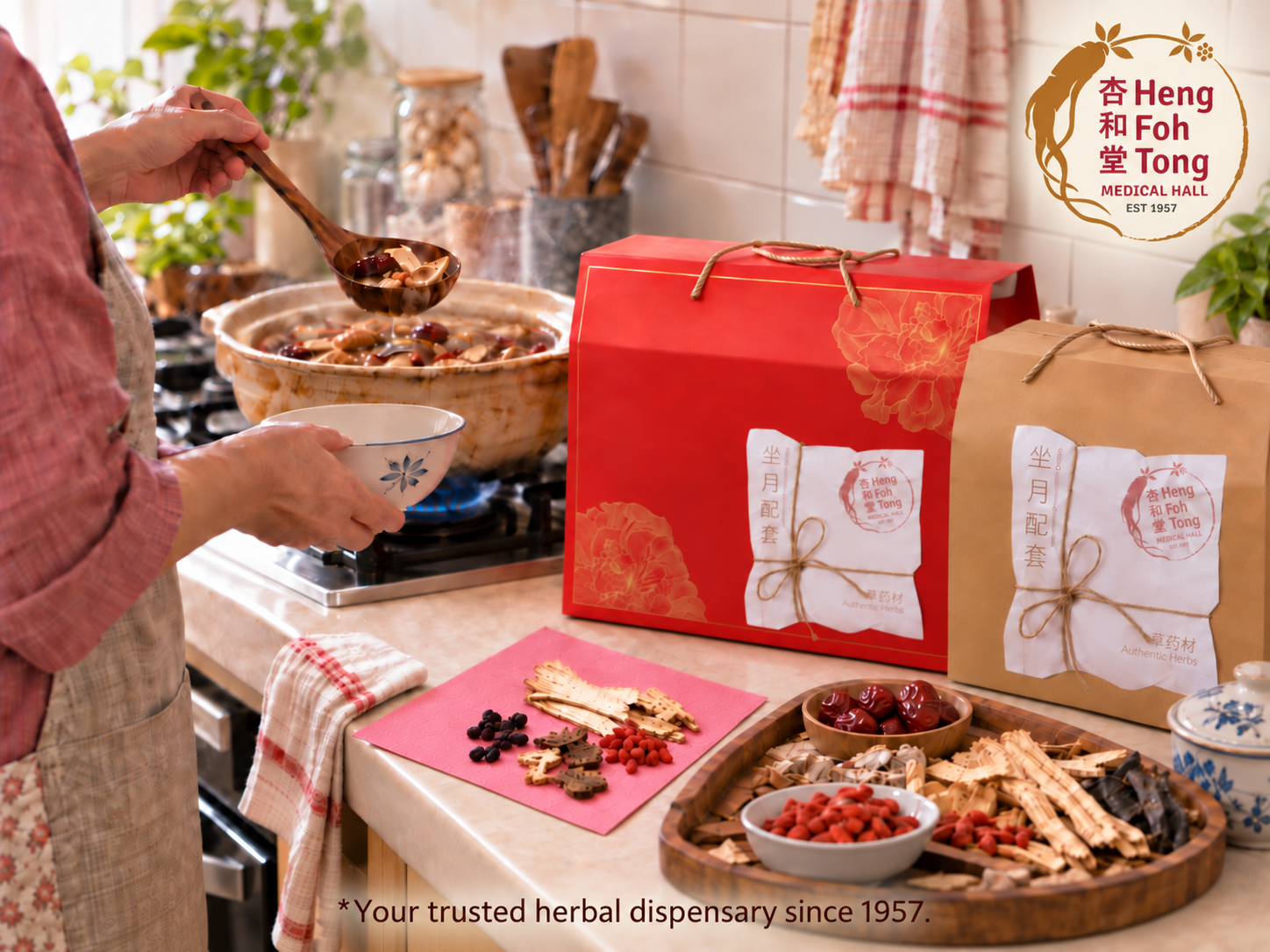
It is six in the morning, and the slow cooker is already humming quietly in the kitchen while the new mother rests. For many caregivers, preparing confinement herbal soups can feel like a big responsibility. Which herbs should you use? How long should you boil them? Should the soups change throughout the confinement period?
The good news is that preparation does not have to be complicated. With properly portioned herbs and clear instructions, most confinement soups can be prepared with a simple rinse, boil and simmer routine. In this guide, Heng Foh Tong, a heritage medical hall dispensing herbs since 1957, shares the basics of preparing traditional confinement herbal soups in Singapore.
Quick Summary
- Confinement soups are traditionally consumed throughout the postpartum recovery period.
- Herbal combinations should be personalised because every mother is an individual with different needs, preferences and recovery circumstances. The types of herbs used, their combination and their quantities may be adjusted accordingly.
- Most soups follow a simple preparation process involving rinsing the herbs and simmering them with the chosen ingredients.
- Different herbal combinations may be used at different stages of confinement.
- Pre-portioned herbal packs can make daily preparation easier for husbands, helpers and other family members.
What Are Confinement Herbal Soups?
Confinement herbal soups are traditional soups prepared for mothers during the postpartum period. Depending on the family’s practices, they may be consumed throughout a 28- to 30-day confinement period or longer.
In Traditional Chinese Medicine (TCM), postpartum nourishment is commonly approached according to the mother’s stage of recovery, body constitution and individual needs rather than using exactly the same formula every day.
The TCM Approach to Postnatal Soups
From a TCM perspective, childbirth is traditionally understood to place considerable demands on a mother’s Qi and blood. Confinement herbal soups therefore commonly contain ingredients traditionally used to support nourishment, warmth, circulation and recovery.
However, stronger does not necessarily mean better. Every mother is different, so the herbal combination should be prepared according to her individual needs, preferences and recovery circumstances.
Depending on the mother, the selection of herbs may vary, with more or fewer types of herbs used and the quantity of each herb adjusted to a suitable amount. Factors such as birth type, body constitution, breastfeeding needs, allergies, health considerations, dietary requirements and personal preferences may all be taken into account.
This is why personalisation is an important part of preparing confinement herbs rather than simply providing the same standard combination to every mother.
A Tradition of Family Care
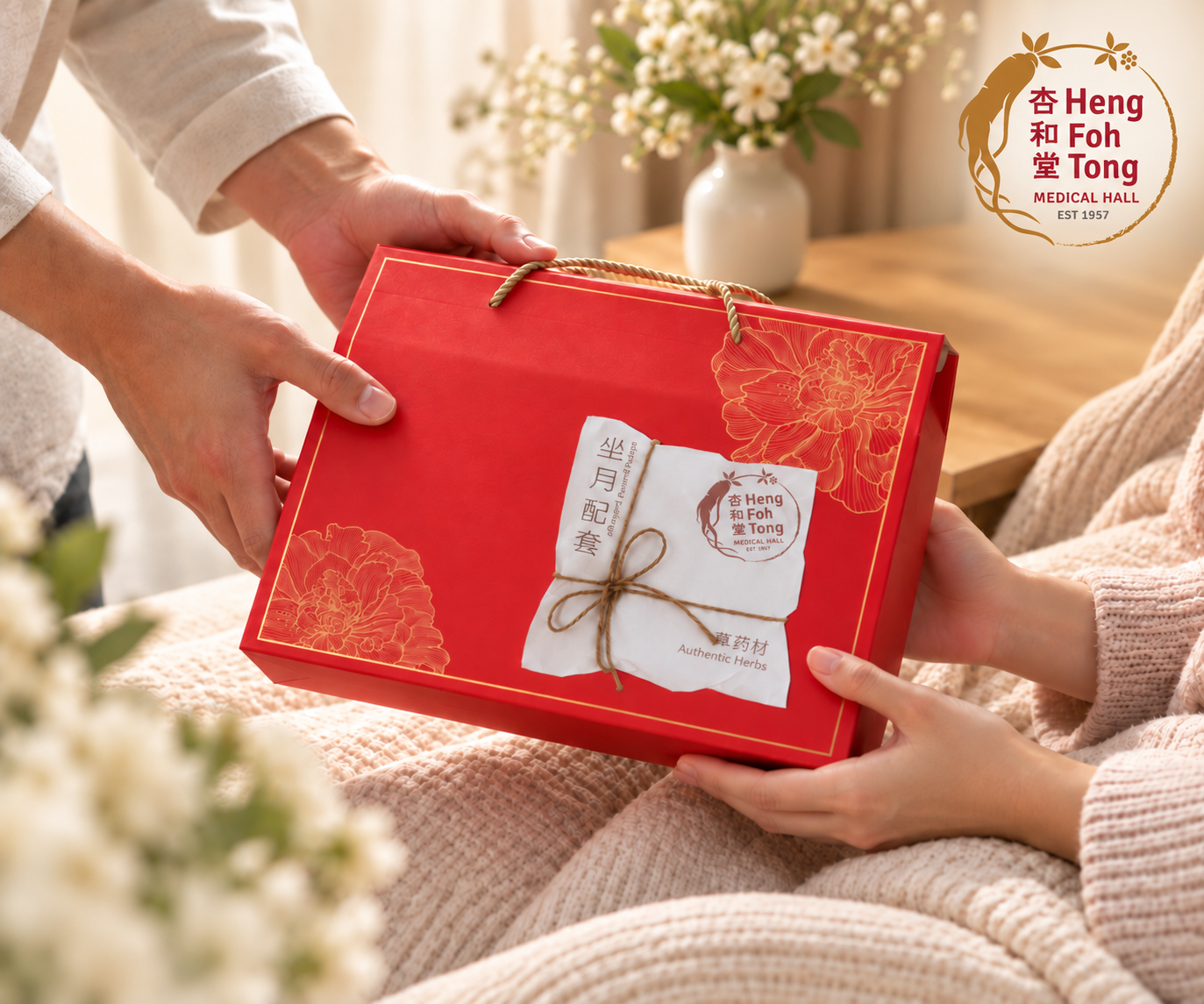
In many Singaporean households, preparing confinement soup is also an act of care. A husband, parent, mother-in-law, confinement nanny or helper may take responsibility for preparing the mother’s daily meals so she can focus on resting, recovering and caring for her newborn.
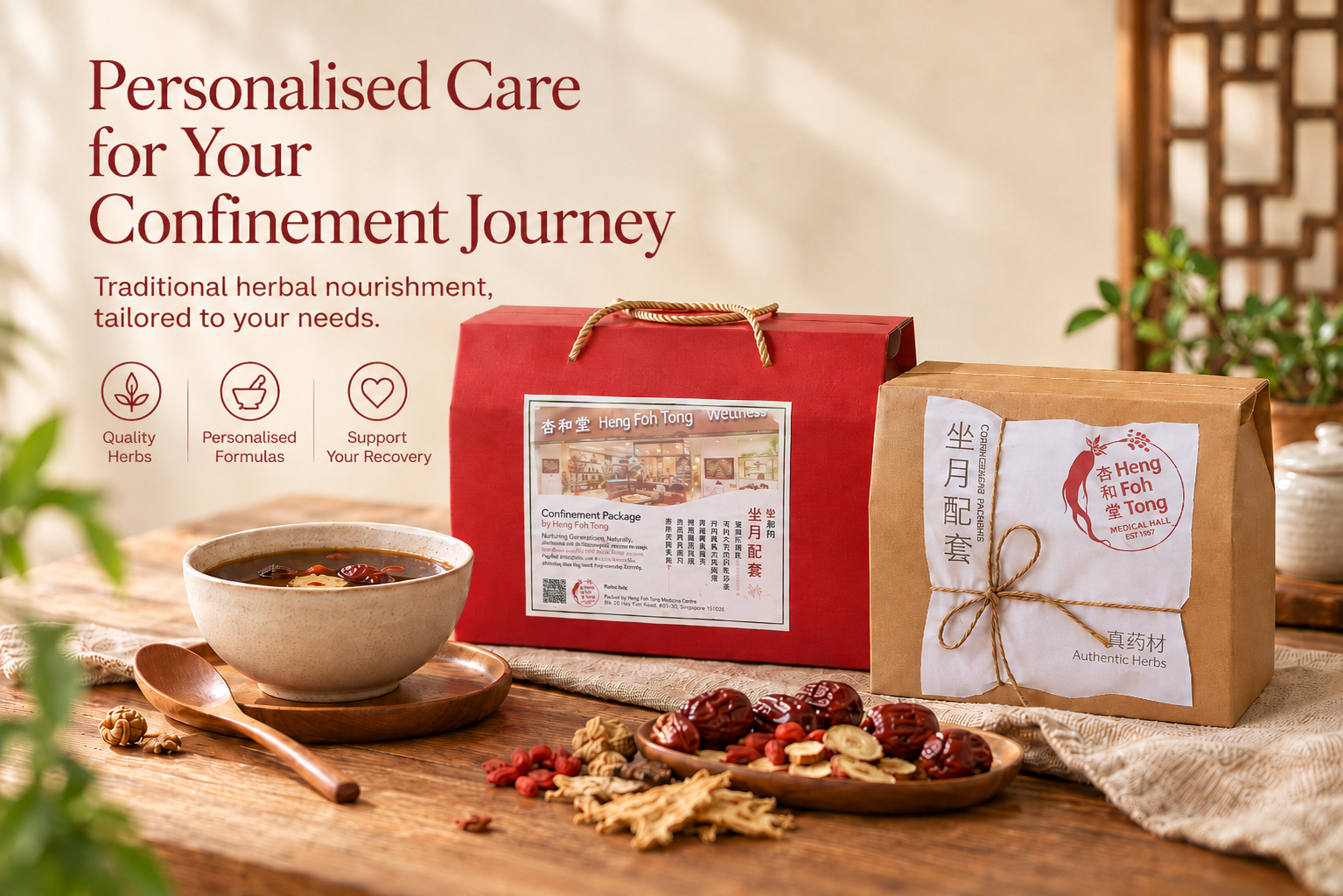
Today, pre-portioned herbal packs can make this tradition more convenient. Rather than estimating the amount of each herb themselves, caregivers can prepare clearly labelled daily packs according to the instructions provided.
Do Confinement Soups Differ After Natural Birth and Caesarean Delivery?
They can. A mother’s birth type is one of several factors that may be considered when preparing her confinement herbal programme.
Traditional practices may introduce certain herbal combinations at different stages depending on whether the mother had a natural birth or Caesarean delivery. Rather than following a fixed timetable for everyone, the herbal combination should be adjusted according to the mother’s recovery and individual circumstances.
| Consideration | Natural Birth | Caesarean Delivery |
|---|---|---|
| Early recovery | Gentler postpartum formulas may be introduced according to recovery needs | Formulas may be adjusted to account for surgical recovery |
| Herbal strength | Gradually adjusted as recovery progresses | Often kept gentler initially before progressing |
| Later confinement | Nourishing and strengthening formulas may be introduced | Nourishing formulas can be adjusted according to recovery |
The important point is not to rush into stronger tonics simply because they are traditionally associated with confinement.
More importantly, birth type is only one consideration. Two mothers who both had natural births, for example, may still have different body constitutions, breastfeeding needs, dietary preferences and recovery experiences. Their herbal programmes therefore do not necessarily need to be identical.
Which Herbs Are Commonly Used in Confinement Soups?
Confinement soups may contain a combination of ingredients traditionally used for nourishment and postpartum recovery. Common examples include red dates, black dates, longan, dang shen, huang qi, wolfberries and dang gui.
However, the exact combination should not be treated as fixed for every mother.
Depending on her individual needs and preferences, the types of herbs used may vary. Some preparations may contain more or fewer herbs, while the quantity or weight of individual herbs may also be adjusted to suit the mother’s circumstances.
Personalisation is therefore not simply about choosing a different soup. It can also involve adjusting the composition and portion of the herbs within that preparation.
Red Dates, Black Dates and Longan
These ingredients are frequently used in traditional confinement preparations.
- Red dates: Commonly used in TCM soups and teas for nourishment and natural sweetness.
- Black dates: Often included in traditional nourishing herbal preparations.
- Longan: Adds natural sweetness and is commonly paired with dates in traditional herbal drinks.
- Red dates tea: Red dates, black dates and longan may be combined to prepare a traditional confinement beverage.
The quantity used matters. Adding more ingredients does not automatically make a herbal soup more suitable or beneficial for an individual mother.
Dang Gui, Dang Shen and Huang Qi
Dang gui, dang shen and huang qi are also commonly found in traditional herbal preparations. Dang gui is traditionally associated with blood nourishment and circulation, while dang shen and huang qi are commonly used in formulas intended to support Qi and vitality.
However, these herbs are not necessarily suitable in the same combination or quantity for every mother.
A personalised programme may therefore contain more or fewer types of herbs, while the amount of individual herbs may also be adjusted. Factors such as birth type, body constitution, breastfeeding needs, recovery progress, health considerations and personal preferences may be considered when the herbs are dispensed.
The focus is not on including as many herbs as possible, but on preparing a combination that is suitable for the individual mother.
What About Breastfeeding Mothers?
Breastfeeding should be considered before confinement herbs are dispensed. Some traditional ingredients may not be suitable for every breastfeeding mother, while others may be selected according to her individual lactation needs.
When ordering a confinement herbal package, let the dispenser know whether the mother is fully breastfeeding, mixed feeding, formula feeding or experiencing specific lactation concerns. The herbal combination can then be adjusted accordingly.
If the mother has known allergies, medical conditions or is taking medication, she should also inform the dispenser and seek appropriate medical advice where necessary.
How Do You Cook Confinement Herbal Soup?
For many pre-portioned confinement soups, preparation is straightforward. Always follow the instructions provided with your specific herbal pack, as different combinations may require different cooking methods.
Step 1: Rinse the Herbs
Start by giving the herbs a quick rinse under clean running water.
You will generally need a strainer, a suitable cooking pot or slow cooker, fresh water and your pre-portioned herbal pack.
Avoid unnecessarily soaking the herbs for long periods unless the preparation instructions specifically call for it.
Step 2: Prepare Your Additional Ingredients
If the soup is being prepared with chicken, fish or other ingredients, prepare them separately before adding them to the herbal broth.
For meat-based soups, some families prefer to blanch the meat first to produce a clearer broth and remove excess impurities. Fish may require a shorter cooking time because it breaks apart more easily during prolonged simmering.
Step 3: Simmer and Serve
Cooking times vary according to the herbal combination, so follow the instructions provided with the pack.
A common approach is to place the herbs in fresh water, bring the water to a boil, reduce to a gentle simmer, add any additional prepared ingredients as instructed and continue simmering until the soup is ready. Serve warm.
Avoid assuming that boiling a herbal soup for longer will make it better. Excessive cooking may affect the taste and texture of some ingredients.
Should Confinement Soups Change Throughout the Month?
They can.
A personalised confinement programme may use different herbal combinations as the mother’s recovery progresses rather than providing identical soups throughout the entire confinement period.
Early Confinement: Gentle Recovery
During the earlier stage of confinement, the focus is generally on gentler preparations that suit the mother’s immediate recovery.
Her appetite, birth type, body constitution and overall condition should all be taken into consideration. For mothers recovering from Caesarean delivery, additional adjustments may also be appropriate.
Mid-Confinement: Nourishment and Vitality
As recovery progresses, the herbal programme may gradually shift towards more nourishing preparations.
Traditional soups used during this stage may focus on supporting Qi, blood and general vitality. Again, the specific herbs and quantities should depend on the individual rather than simply following a generic week-by-week formula.
Later Confinement: Strengthening
Towards the later stages of confinement, traditional programmes may include more strengthening and nourishing preparations as the mother gradually returns to her usual routine.
Some premium confinement programmes may also include additional products such as bird’s nest.
| Stage | General Focus |
|---|---|
| Early confinement | Gentle nourishment and recovery |
| Mid-confinement | Qi, blood and vitality support |
| Later confinement | Strengthening and continued nourishment |
This progression should not be treated as a rigid formula.
Every mother’s recovery journey is different. Her needs may change throughout confinement, which means the herbal selection and quantities may also need to change along the way.
What Cooking Mistakes Should You Avoid?
Even a good herbal pack can be prepared poorly. Here are several common mistakes to avoid.
1. Assuming Longer Boiling Is Better
Leaving every herbal soup boiling for hours is unnecessary.
Different ingredients respond differently to prolonged cooking, and excessive simmering can make some soups overly strong or bitter. Follow the recommended preparation time for the particular herbal pack.
If the soup needs to cook while the caregiver is occupied, a slow cooker can be a convenient alternative where appropriate.
2. Adding Too Much Ginger, Wine or Sesame Oil
Traditional confinement cooking often includes warming ingredients such as ginger and sesame oil. However, more is not always better.
The amount should suit the mother’s individual body constitution, comfort and recovery needs.
Alcohol-containing ingredients also require particular consideration for breastfeeding mothers. If there is any uncertainty, seek appropriate professional advice before including them.
3. Using the Same Formula for Every Mother
One of the biggest mistakes is assuming that every mother needs exactly the same confinement herbs.
There is no single combination or quantity that is necessarily suitable for everyone. Factors such as birth type, breastfeeding plans, allergies, medical conditions, body constitution, recovery progress, dietary requirements and personal preferences may all influence the programme.
Personalisation can therefore involve not only changing which herbs are included, but also adjusting the quantity of individual herbs according to the mother’s needs.
This is why a personalised herbal programme can be more appropriate than simply selecting a generic combination of commonly used herbs.
Where Can You Buy Confinement Herbs in Singapore?
Heng Foh Tong is a Singapore heritage medical hall established in 1957, offering freshly dispensed confinement herbal packages. The packages are prepared according to the mother’s information and can be delivered across Singapore.
What Does a Personalised Confinement Package Include?
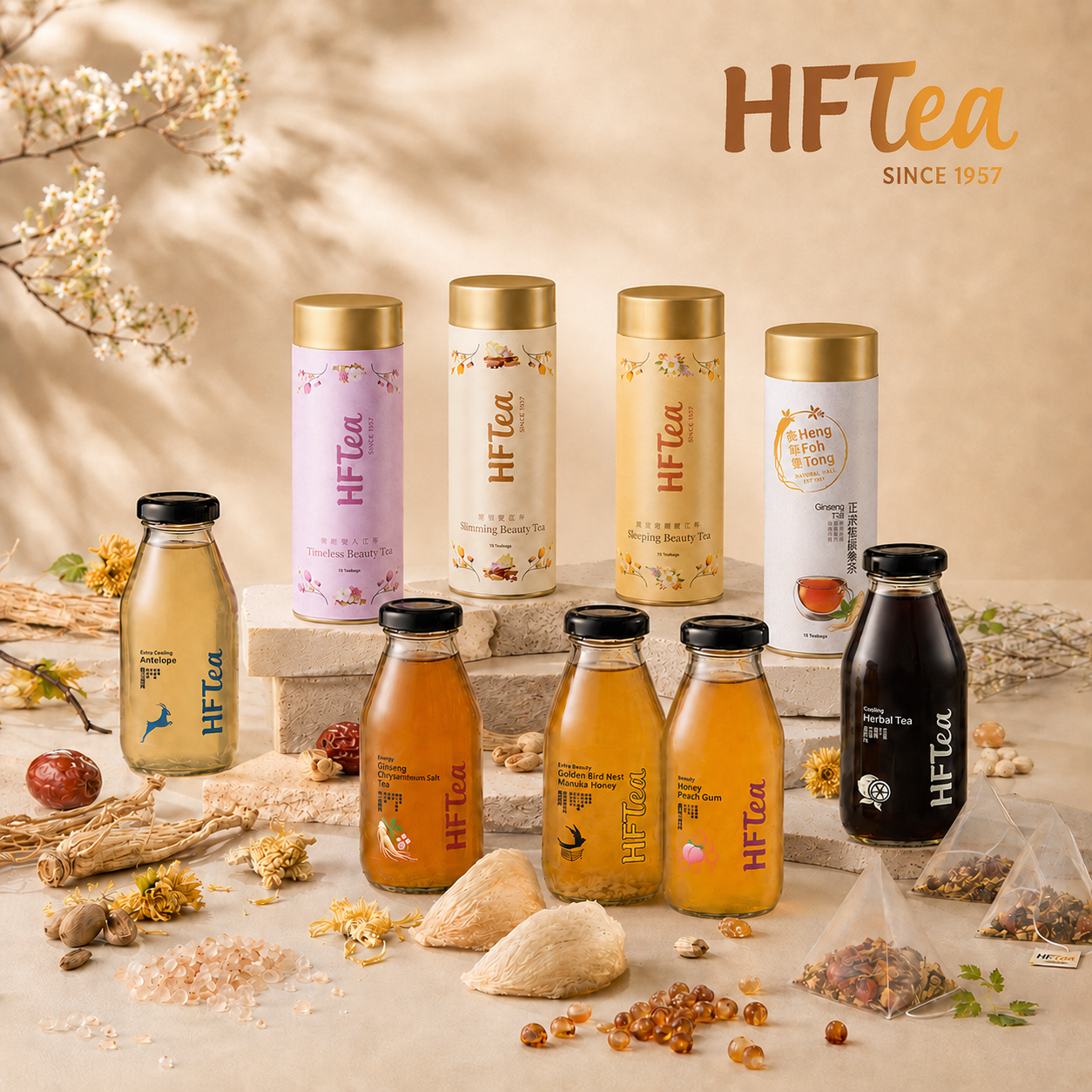
Depending on the package selected, a confinement programme may include daily soup herbs together with items such as herbal teas, mummy baths, baby baths and premium products.
Available options include shorter soup-focused programmes as well as more comprehensive confinement packages.
| Package | Duration | General Inclusions |
|---|---|---|
| Necessity Soup-Only Pack | 14 or 28 Days | Daily pre-portioned confinement soup herbs |
| 28 Days Nanny’s Series | 28 Days | Soups, tea, mummy and baby baths, and additional items |
| Top Grade Postnatal Package | 38 Days | Premium herbs, bird’s nest drinks, baths and additional confinement items |
Exact inclusions may vary, so families should refer to the latest package details and promotional information before ordering.
Fresh Dispensing With Personalisation
Rather than treating confinement herbs as a standard one-size-fits-all package, Heng Foh Tong places personalisation at the centre of its confinement programmes.
Drawing on traditional dispensing experience passed down through generations, herbs are freshly dispensed upon order from its Bukit Batok medical hall.
Before dispensing, families can provide information such as the mother’s birth type, breastfeeding plans, allergies, health considerations, dietary requirements, body constitution and personal preferences.
Based on the mother’s individual circumstances, the herbal selection may vary. More or fewer types of herbs may be included where appropriate, while the quantity or weight of individual herbs can also be adjusted according to her needs.
The goal is not simply to provide every mother with the same standard set of confinement herbs, but to prepare a programme with the individual mother in mind.
Families should confirm the latest delivery arrangements when placing their order.
Cook With Confidence, One Warm Bowl at a Time
Preparing confinement herbal soup does not need to be complicated.
With properly portioned herbs, clear preparation instructions and a programme suited to the mother’s needs, husbands, family members, confinement nannies and helpers can all take part in preparing her daily soups.
More importantly, confinement herbs should not be treated as one-size-fits-all.
Every mother is an individual, with her own needs, preferences and recovery journey. The types of herbs used, their combination and their quantities may therefore need to be adjusted according to factors such as birth type, breastfeeding plans, allergies, body constitution, health considerations and recovery progress.
This personalised approach, supported by Heng Foh Tong’s traditional dispensing experience passed down through generations, allows each confinement programme to be prepared with the individual mother in mind.
By combining traditional practices with personalised preparation and modern convenience, families can make the confinement period easier to manage, one warm bowl at a time.
How long should confinement soup be boiled?
Cooking time depends on the herbal combination and additional ingredients used. Always follow the preparation instructions supplied with your herbal pack rather than assuming every confinement soup requires the same cooking time.
Can I cook confinement soup in a slow cooker?
Yes, many confinement soups can be prepared using a slow cooker. Follow the recommended cooking instructions for the particular herbal combination and adjust the cooking time accordingly.
Is Heng Foh Tong suitable for mothers who had a Caesarean delivery?
Heng Foh Tong’s confinement herbal packages can be personalised according to the mother’s birth type and recovery considerations. Inform the dispenser that the mother had a Caesarean delivery before the herbs are prepared.
Why does personalisation matter for confinement herbs?
Every mother has different needs, preferences, body constitution and recovery circumstances. Personalisation may therefore involve changing the types of herbs used, including more or fewer herbs where appropriate, and adjusting the quantity or weight of individual herbs.
The aim is to prepare a confinement programme according to the individual mother rather than assuming the same combination is suitable for everyone.
Can the quantity of individual herbs be adjusted?
Yes. Personalisation is not limited to selecting different herbs. The quantity or weight of individual herbs may also be adjusted according to the mother’s needs and circumstances.
Where can I buy Heng Foh Tong confinement herbs in Singapore?
Heng Foh Tong offers confinement herbal packages from its Bukit Batok medical hall, with delivery available in Singapore. Check the latest ordering and delivery arrangements when purchasing.
Are confinement herbal soups suitable while breastfeeding?
The herbal combination should take breastfeeding into consideration. Inform the dispenser about the mother’s breastfeeding plans before the herbs are prepared, particularly if she has specific lactation concerns or is taking medication.
Can a helper or husband cook the confinement soups?
Yes. Pre-portioned and clearly labelled herbal packs are designed to make preparation easier for husbands, family members, confinement nannies and helpers.
Always follow the cooking instructions provided for each day’s herbal pack.